A manufacturing company wins a big contract. The production requirement for each month increases however the facility has no room and has employees with previous experience or more hours to work during the day. An increase in production for a short period may be possible, but an additional shift may bring new demands for labor training, supervision, and quality control.
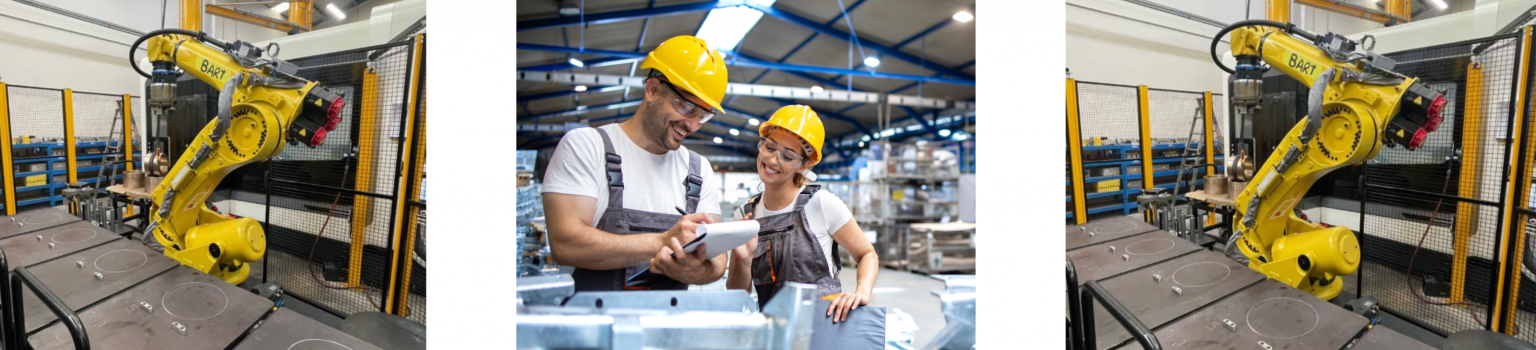
Image credit: automatedsolutions.com.au
Situations like this reveal an important purpose of robotic automation. Robotics does not only replace people with machines. If it is used correctly it can alter how companies use the capacity they have.
Check out the minutes that vanish between products
Inefficiency in manufacturing doesn’t have to be dramatic. A worker may take 15 seconds positioning the component before implementing 10 seconds of materials, and then a few seconds to move it onto the next stage. On one piece it’s not much of a difference. When repeated thousands of times however, those seconds become an enormous amount of production time.
The same is true for wasted material. A tiny amount of surplus coating or dispensing material multiplied across a high-volume production run could result in a significant expense.
Companies considering robotic automation Australia projects can benefit from studying these tiny, repeated losses before deciding what equipment they need. The needs analysis of ASA is designed to find bottlenecks, inefficiencies, quality issues, and other constraints to the process that may affect an automation project.
Robots must be able to fit into the process.
The choice of a robot is just one engineering decision. It might be necessary to incorporate tooling, security and controls, sensors as well as conveyers, fixtures electronic integration and communication to the production equipment already in place. Engineers must take into consideration the reach and payload of the robot while making decisions about how the robot will move through its area of work and interact with everything around it.
ASA provides the ability to develop concepts, system design and offline programming in its approach to robotic automation. Digital simulation allows engineers to investigate configurations and estimate durations of the cycle before the system is operating in the factory of the customer’s. This is particularly helpful when there are space constraints or when new robotics have to be integrated with the existing lines of production.
The importance of consistency in painting and dispensing
Controlled movement is essential for certain manufacturing processes. Imagine coating hundreds, or thousands of parts. It’s not just about completing the components quickly is what you want to achieve. The movement, distance, speed, and the application must to be monitored at the beginning of the production process to the time of its completion.
ASA has specialists who work with dispensing applications and paint across industries, including automotive and aeronautics. In these areas industrial robotic automation could ensure that the same program is repeated while also reducing employee exposure to physically demanding or potentially dangerous processes.
An improved control over the waste material can also increase productivity by cutting down on the amount of waste material that is consumed.
Installing the system is not enough. You will require people to manage it.
Automatism isn’t a substitute for manufacturing knowledge. The skills required to operate, maintain and operate the process shift.
Employees need to be able recognize unusual behavior and resolve issues, and carry out the correct maintenance. Systems and procedures are able to be changed later if production requirements shift.
ASA offers on-site training in programming, safe operation, troubleshooting, and mechanical and electrical maintenance. The company provides continuous maintenance and services to ensure that equipment is in good repair and wear and tear issues are dealt with.
Capacity is about more than Working Faster
Increased capacity for Australian manufacturers doesn’t always mean buying a bigger building or adding more labor to repetitive processes. The better question to ask is whether the existing manufacturing process can be improved.
ASA is designing and integrating automation solutions since 2002. It supports manufacturers in Australia and also international projects. The company’s strategy combines analysis of needs, engineering, simulation, FANUC robot integration Training, and servicing.
The goal isn’t to automate to achieve its own goals. An investment-worthy system should provide a company with quantifiable results, like more reliable production, higher quality, more secure procedures, reduced waste or increased capacity.